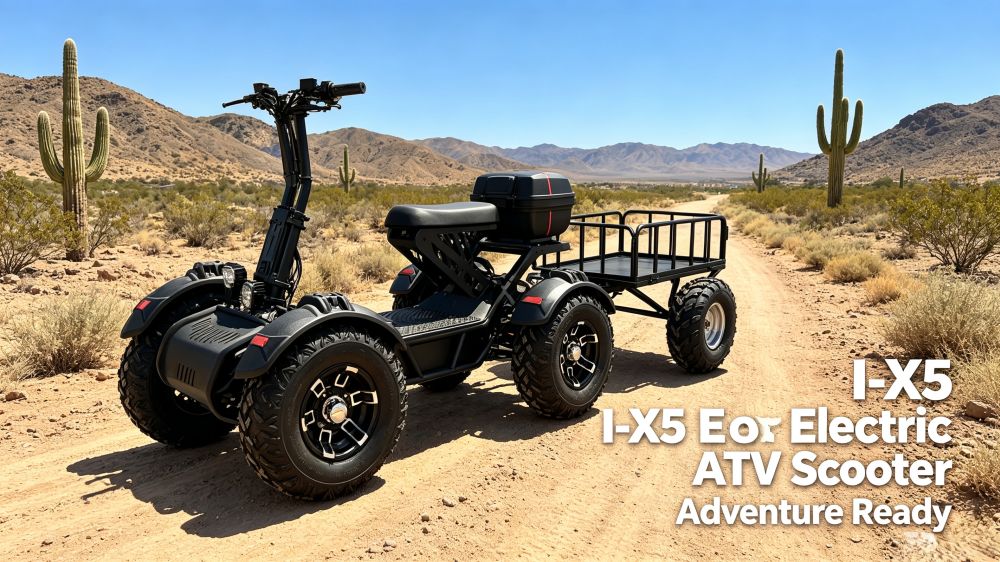
Everything You’ve Been Wondering, Answered Straight Up
So you’ve got questions about your 4X4 electric ATV scooter? Perfect. That means you’re thinking like a smart rider. Whether you’re still shopping around, just took delivery, or you’ve already put some miles on your machine, there’s always more to learn. I’ve rounded up the twenty questions I hear most often—from beginners and experienced riders alike. Let’s dive in.
The Basics
1. What exactly is a 4X4 electric ATV scooter?
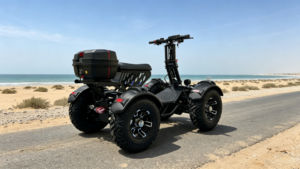
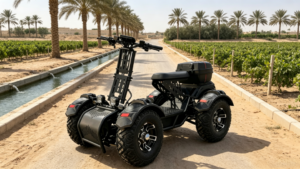
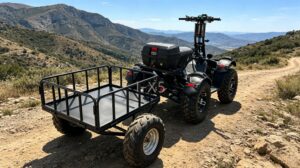
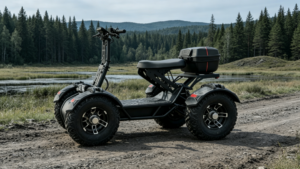
Think of it as the best of both worlds. You’ve got the compact, approachable size of a scooter combined with the rugged, all-terrain capability of a four-wheel-drive ATV. It’s battery-powered, so no gas, no oil changes, no exhaust fumes. Just twist the throttle and go—over grass, gravel, dirt, sand, and light trails. Your 4X4 electric ATV scooter sends power to all four wheels, giving you traction and confidence that two-wheel-drive machines simply can’t match.
2. Do I need a special license to ride one?
It depends where you live. In many places, off-road use doesn’t require any license at all. If you plan to ride on public roads, some regions require registration, insurance, and a valid driver’s license. Others classify low-speed electric vehicles differently. My advice? Check with your local DMV or transportation authority before you ride. Rules vary wildly by state, country, and even municipality. Don’t guess—know.
3. How fast does it go?
Most 4X4 electric ATV scooters top out between 20 and 35 miles per hour. That might not sound like much compared to a sports car, but on rough terrain, it feels plenty quick. Many models offer multiple speed modes—Eco caps you around 15 mph for learning and efficiency, Normal gets you to 20–25 mph, and Sport unlocks the full top speed. Honestly? On a winding trail, 25 mph feels like flying.
4. How far can I go on a single charge?
Real-world range typically falls between 25 and 60 miles, depending on your battery size, terrain, rider weight, speed, and whether you’re using 4X4 mode constantly. Flat pavement at moderate speed? You’ll hit the high end. Deep sand, steep hills, full throttle? Expect less. My rule: plan for about 70% of the manufacturer’s claimed range. That buffer keeps you from pushing your machine home.
Battery and Charging
5. How long does it take to charge?
From empty to full, most electric ATV scooters take between 6 and 10 hours using a standard household outlet. Some models support fast charging that cuts that to 3–4 hours. A few high-end options offer quick-swap batteries you can exchange in minutes. Overnight charging works perfectly for most riders. If you’re running a commercial operation, consider investing in spare batteries or fast chargers.
6. Can I charge it from a regular wall outlet?
Absolutely. Standard 110V or 220V household outlets work fine. Your charger plugs right in—no special installation needed. That said, if you’re charging in a garage or shed, make sure the outlet is properly grounded and protected from weather. For faster charging or multiple vehicles, you might eventually want a dedicated 240V circuit installed. But starting out? Your kitchen outlet will do just fine.
7. How long does the battery last before I need to replace it?
Quality lithium-ion batteries typically last 3 to 5 years or 800 to 1,500 charge cycles before noticeable degradation. But “last” doesn’t mean “dead”—it means capacity drops to about 80% of original. Your range shrinks slightly, but the battery still works. Proper care extends lifespan: avoid extreme heat, don’t store fully discharged, and try not to drain to zero regularly. Treat it well, and it’ll treat you well.
8. What happens if I run out of battery in the middle of nowhere?
Not fun, but not the end of the world. First, your display gives plenty of warning before you’re empty—usually starting around 20% charge. If you do hit zero, your options are: push it (doable on flat ground, exhausting on hills), call for a pickup, or carry a portable charger if you’re on a long expedition. Some riders tow a small solar panel for emergency top-ups. Best strategy? Plan your route conservatively and always carry a phone.
Riding and Performance
9. Is it hard to learn to ride?
Not at all. If you can ride a bicycle, you can ride a 4X4 electric ATV scooter. There’s no clutch, no gears, no kickstarting. Twist the throttle and go. The four wheels give you stability that motorcycles can’t match. Most beginners feel comfortable within their first hour. That said, respect the machine. Start slow, practice in open areas, and build your skills gradually. Confidence comes from competence, not courage.
10. Can it really handle off-road terrain?
Yes—within reason. Your 4X4 electric ATV scooter handles grass, gravel, dirt trails, packed sand, light mud, and moderate hills with ease. The four-wheel-drive system gives you genuine off-road capability. But let’s be real: it’s not a Jeep Wrangler. Deep mud, boulder fields, and extreme rock crawling are beyond its design. Know your machine’s limits, and it’ll take you amazing places.
11. How does it perform on hills?
Thanks to instant electric torque and 4X4 traction, hill climbing is actually a strength. Approach at a steady speed, keep your weight forward, and maintain smooth throttle. The motor doesn’t bog down like a gas engine might. Descending? Use engine braking by releasing the throttle, then apply brakes gently if needed. Shift your weight back. Your machine can handle it if you ride smart.
12. What’s the difference between 2WD and 4X4 mode, and when should I use each?
2WD (two-wheel drive) powers either the front or rear wheels—usually the rear. It’s fine for flat, hard surfaces and saves battery. 4X4 powers all four wheels, giving you maximum traction for loose terrain, hills, and slippery conditions. My habit? Start in 4X4 until I know the terrain, then switch to 2WD on easy stretches to extend range. Most 4X4 electric ATV scooters let you toggle on the fly.
Safety and Gear
13. What safety gear do I actually need?
At minimum: a proper DOT or Snell-certified helmet. Non-negotiable. Beyond that, I strongly recommend gloves (for grip and protection), long sleeves and trousers (road rash hurts on dirt too), and closed-toe boots with ankle support. Eye protection—sunglasses or goggles—keeps dust and bugs out. As you ride faster or rougher terrain, consider a chest protector and knee pads. Dress for the crash, not just the ride.
14. Is it safe for kids to ride?
Many 4X4 electric ATV scooters have youth models or parental controls that limit speed. These can be great for responsible older kids and teenagers. But—and this is important—match the machine to the rider. A full-sized adult ATV is too much for a ten-year-old, no matter how mature they seem. Supervise closely, require full safety gear, and use speed limiters. Many accidents happen when inexperienced young riders get in over their heads.
15. What should I do if I tip over?
First, stay calm. It happens. Cut the power immediately if you can. Check yourself for injury. If the machine landed on its side, inspect for leaking fluids (there shouldn’t be any with electric, but check anyway), damaged controls, or bent components. If everything looks okay, upright it carefully—electric models are heavy, so get help if needed. Test brakes and throttle before riding again. Learn from it: what caused the tip? Speed? Terrain? Technique? Adjust accordingly.
Maintenance and Ownership
16. How much maintenance does an electric ATV scooter need?
Way less than gas. No oil changes, no spark plugs, no air filters, no fuel system cleaning. Your main tasks: keep it clean, check tire pressure, inspect brakes, tighten loose bolts, and charge the battery properly. Suspension components may need occasional attention. It’s genuinely low-maintenance, which is one of the biggest perks of going electric.
17. Can I ride it in the rain?
Most quality 4X4 electric ATV scooters have weather-resistant electrical systems—look for IP65 rating or higher. Light rain and splashes are fine. Heavy downpours, deep water crossings, or submerging components? Avoid those. Water and electricity aren’t friends. If you do get caught in a storm, dry the machine thoroughly afterward and let it air out before charging.
18. Where can I legally ride?
This varies enormously. Private property? Generally fine with the owner’s permission. Designated off-road parks and trails? Usually yes, sometimes with a permit. Public roads? Depends entirely on local laws—some places allow low-speed electric vehicles, others don’t. National parks and public lands often have specific rules. When in doubt, call ahead. Getting ticketed or having your machine impounded ruins a good day fast.
Buying and Value
19. How much should I expect to spend?
Entry-level models start around $2,000–$3,000. Mid-range machines with better batteries and features run $4,000–$7,000. Premium models with extended range, advanced suspension, and commercial-grade construction can hit $8,000–$12,000. Remember to budget for gear, accessories, and potential registration costs. Don’t just look at purchase price—factor in operating savings. No gas, minimal maintenance, and cheap electricity mean your total cost of ownership is often far lower than gas alternatives.
20. How do I know I’m buying from a reputable brand?
Do your homework. Look for:
- Established presence: Website, reviews, active social media
- Clear specifications: Real battery capacity, motor power, weight ratings—not just vague marketing claims
- Warranty terms: At least one year on the vehicle, two years on the battery
- Parts availability: Can you get replacement components easily?
- Customer service: Responsive support before you buy suggests responsive support after
- Dealer network: Local service is invaluable for anything beyond basic maintenance
Read owner forums and reviews. Ask questions before you buy. A good brand welcomes scrutiny; a shady one deflects it.
Bonus Question: Is an Electric ATV Scooter Really Worth It?
You didn’t ask, but I’ll answer anyway: yes. For most riders, absolutely yes.
The silence changes everything. You hear the world around you. You don’t come home smelling like exhaust. Your neighbours don’t hate you. Maintenance is minimal, costs are low, and the environmental guilt is zero. Plus, that instant torque? It’s addictive in the best way.
Your 4X4 electric ATV scooter isn’t perfect for every single scenario—nothing is. But for property management, trail riding, hunting and fishing access, campground cruising, and just plain fun? It’s hard to beat.
Ready to Ride?
There you have it—twenty questions, twenty honest answers. The best way to learn the rest? Get out there. Twist that throttle. Feel the dirt under your tires. Discover what your machine can do, and what you can do on it.
The trail is waiting. Your 4X4 electric ATV scooter is charged. The only question left is: where are you riding first?
Ride safe. Ride smart. Ride electric.