Hey there! Let me tell you something—I used to be that person who thought electric scooters were just for city kids zipping around campus. You know the type: tiny wheels, wobbly frame, good for about three blocks before the battery dies. Cute, but not exactly serious transportation.
Then I discovered the four-wheels off road electric scooter. And honestly? My whole perspective shifted.
If you haven’t been paying attention to what’s happening in personal mobility overseas in 2026, buckle up. This isn’t your average scooter trend. This is a genuine movement, and I’m here to walk you through why the Edge Scooter and machines like it are becoming the go-to ride for millions of people across Europe, Asia, Australia, and beyond.
What Even Is a Four-Wheels Off Road Electric Scooter?
Let me break this down in plain English, because the name is a mouthful.
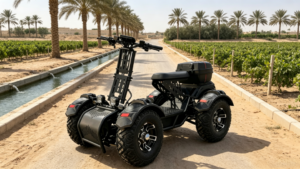
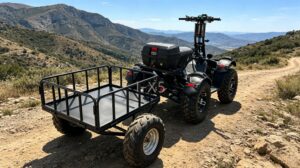
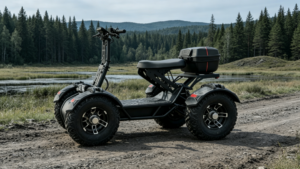
Imagine taking a traditional electric scooter and giving it a serious upgrade. Not just one or two improvements—we’re talking a complete transformation. You add two extra wheels for stability. You swap the tiny urban tires for rugged, all-terrain treads. You beef up the suspension so it can handle gravel, grass, dirt paths, and even light mud. You install a battery pack that actually lasts, and a motor that can climb hills without breaking a sweat.
What you end up with is something that doesn’t fit neatly into any old category. It’s not quite an ATV, though it can go many places ATVs go. It’s not a golf cart, though it’s just as practical for getting around large properties. It’s not a traditional scooter, though it shares that same intuitive, hop-on-and-go simplicity.
It’s a four-wheels off road electric scooter. And in 2026, it’s everywhere.
Why 2026 Is the Tipping Point
I’ve been following this market for a few years now, and 2026 feels different. Here’s what’s driving the explosion:
Battery Tech Finally Caught Up
For the longest time, the problem with electric off-road vehicles was simple: batteries weren’t good enough. You’d get twenty minutes of fun and then spend six hours charging. Not exactly practical.
That’s changed. Modern lithium battery packs—like the ones powering the Edge Scooter lineup—deliver serious range. We’re talking 40, 50, even 60 miles on a single charge, depending on terrain and riding style. For daily use, that’s more than enough. For weekend adventures, it means you can actually go places without constantly checking your battery indicator.
Charging speeds have improved too. Many models now support fast charging that gets you back to 80% in under two hours. Plug in during lunch, and you’re ready for the afternoon.
The World Went Green (For Real This Time)
Look, environmental consciousness isn’t new. But in 2026, it’s not just activists and early adopters anymore. It’s mainstream. It’s policy. It’s economics.
Countries across Europe have tightened emissions regulations to the point where gas-powered recreational vehicles are becoming genuinely expensive to own and operate. Cities are banning combustion engines from certain areas. Fuel prices? Don’t get me started.
An electric vehicle sidesteps all of that. No emissions. No noise violations. No fuel costs. In many regions, there are even tax incentives or subsidies for electric personal mobility. The math just keeps getting better.
Remote Work Changed Where We Live
This one’s personal for me. When remote work became normalized, a lot of people—myself included—moved out of cramped city flats and into places with actual space. Suburbs, small towns, rural properties. Places where a bicycle is limiting and a car feels like overkill for short trips.
A four-wheels off road electric scooter fills that gap perfectly. Need to check the mailbox at the end of a long gravel drive? Hop on. Want to explore the trails behind your property? Easy. Running down to the village shop? Faster than walking, cheaper than driving, and way more fun than either.
The Tourism Industry Discovered Them
Travel abroad in 2026, and you’ll see these things everywhere. In Portugal, vineyard tours use them to glide between rows of grapes. In New Zealand, adventure companies offer guided trail rides. In Japan, rural inns provide them for guests to explore mountain paths. In Costa Rica, eco-lodges swear by them for low-impact jungle access.
The Edge Scooter platform, in particular, has become a favorite for commercial operators because it’s reliable, easy to maintain, and guests absolutely love the experience. It’s become a genuine competitive advantage in the tourism market.
What Makes Them So Special?
I’ve ridden a lot of these machines now, and there are a few things that consistently stand out. Let me share what I’ve learned.
Stability That Builds Confidence
The four-wheel design isn’t just a gimmick—it’s transformative. If you’ve ever tried to ride a two-wheel scooter on loose gravel or uneven ground, you know the terror of that wobble. Will you catch it? Will you go down? It’s exhausting.
Four wheels eliminate that anxiety entirely. You feel planted. Secure. Even on slopes, even in light mud, even when you’re carrying cargo. For older riders, nervous beginners, or anyone who’s had a bad fall before, this stability is liberating. My mum could ride one of these. My kids could too. That accessibility is huge.
Silence Is Golden
I cannot overstate how pleasant it is to ride something that doesn’t roar. When you’re on a trail, you can actually hear birdsong. You can chat with a passenger without shouting. You can ride early in the morning without waking the neighbors.
In many European countries, noise restrictions in natural areas are strict. Gas vehicles get fined or banned. Electric? No problem. You’re welcome everywhere.
Running Costs That Make You Smile
Let’s do some quick math. A typical gas ATV might get 20-30 miles per gallon, and you’re using premium fuel. At current prices, a day of riding could easily cost £15-20 in fuel alone.
An electric scooter? The same distance costs maybe £1-2 in electricity. Maintenance is minimal—no oil changes, no spark plugs, no air filters, no fuel system to gum up. Brake pads last longer because of regenerative braking. The motor has maybe a dozen moving parts versus hundreds in a combustion engine.
Over a year of regular use, the savings are substantial. Over the lifetime of the vehicle, they’re massive.
Versatility You Didn’t Expect
I use mine for everything. Morning exercise on woodland trails. Hauling garden waste to the compost heap. Quick trips to the village that don’t warrant starting the car. Giving visiting friends a tour of the area. Even just quiet evening rides to clear my head.
Some folks use them for hunting access, photography, birdwatching, property management, small-scale farming. The applications are endless because the machine is so capable and so approachable.
The Edge Scooter Difference
I’ve mentioned the Edge Scooter a few times, and I want to explain why. In a market that’s getting crowded, they’ve done something smart: they focused on the total experience, not just the vehicle.
Built for Real Conditions
A lot of electric scooters look great in a showroom and fall apart in actual use. The Edge Scooter platform is engineered for the real world—dust, moisture, temperature swings, rough handling. Sealed components. Robust frames. Suspension that actually works.
I’ve ridden mine through British drizzle, Australian dust, and Alpine gravel. It just keeps going.
Thoughtful Design Details
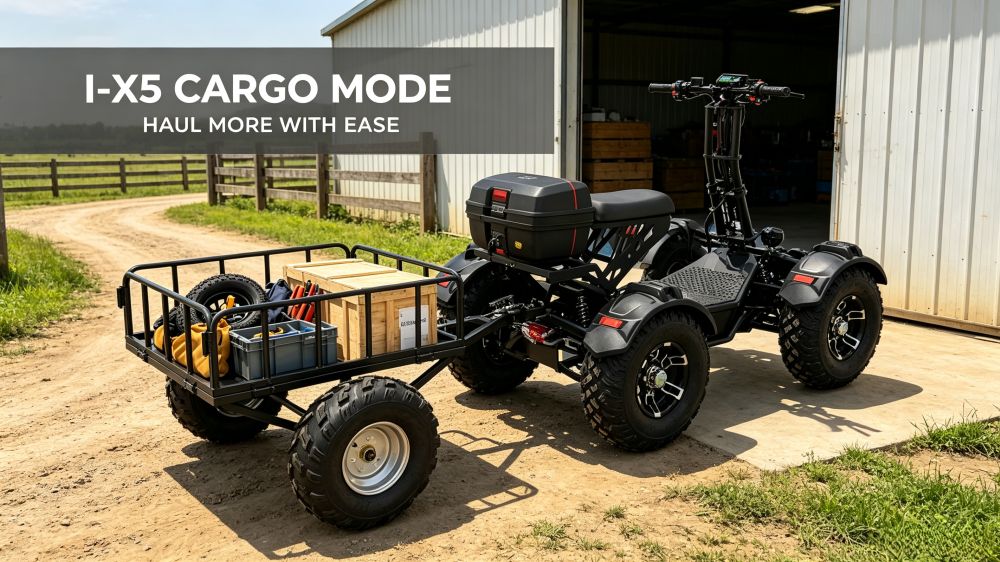
Little things matter. A USB port to charge your phone. A cargo rack that actually fits standard panniers. A seat that’s comfortable for an hour, not just ten minutes. Lighting that’s bright enough for dusk riding. A display you can read in sunlight.
These aren’t revolutionary features individually. But together, they show that the designers actually ride these things. They understand what users need.
Support That Doesn’t Disappear
Buy cheap, buy twice—that’s the old saying. With electric vehicles, after-sales support is crucial. Batteries age. Components wear. Accidents happen.
The Edge Scooter network includes trained technicians, available spare parts, and responsive customer service. That’s not exciting to talk about when you’re buying, but it’s everything when you need help.
What to Look For When Buying One
If I’ve convinced you to explore this world, here are my honest tips from someone who’s made a few mistakes along the way.
Range: Be Realistic
Manufacturers love to quote maximum range. In the real world, hills, cargo, rider weight, and speed all eat into that figure. I recommend looking at the quoted range and mentally cutting it by 25%. If that adjusted figure still meets your needs, you’re golden.
Weight Capacity: Don’t Skimp
These machines have weight limits for a reason. Exceeding them strains the motor, drains the battery, and wears components prematurely. If you weigh 90kg and regularly carry 20kg of gear, don’t buy a scooter rated for 100kg. Give yourself a buffer.
Terrain Matching
Be honest about where you’ll ride. If you’re mostly on flat, maintained paths, you don’t need extreme off-road capability. If you’re tackling serious hills and rough ground, invest in proper suspension and a powerful motor. A machine that’s under-spec’d for your terrain will disappoint you daily.
Test Before You Commit
I know, I know—sometimes you have to buy online. But if at all possible, find a dealer and take a test ride. Specifications don’t tell you how a machine feels. The ergonomics, the throttle response, the braking feel, the comfort—those are things you have to experience.
Consider the Ecosystem
Charging infrastructure, local regulations, insurance requirements, available accessories—these vary by region. A brilliant scooter in Germany might be problematic in rural Thailand. Do your local homework.
Common Concerns (And Why They’re Overblown)
Let me address the worries I hear most often, because I had them too.
“What if the battery dies?”
Modern batteries are remarkably reliable. They don’t just suddenly quit like a phone might. You get gradual degradation over years, not catastrophic failure. And with proper range planning, you simply don’t run out. It’s like worrying your car will run out of petrol—you pay attention and refuel before it happens.
“Aren’t they expensive?”
Upfront, yes, compared to a basic bicycle or a cheap petrol scooter. But factor in fuel savings, minimal maintenance, and longevity, and the total cost of ownership is highly competitive. Many owners find they break even within two to three years compared to a gas equivalent.
“What about repairs?”
Electric drivetrains are dramatically simpler than combustion engines. Fewer things to break means fewer things to fix. Most routine maintenance you can do yourself—tire pressure, brake checks, cleaning. For anything serious, the growing dealer network has you covered.
“Are they actually fun?”
Oh yes. The instant torque of an electric motor is genuinely thrilling. The silence lets you feel connected to your surroundings. The stability lets you ride terrain you’d never attempt on two wheels. Fun doesn’t require noise and fumes. In fact, I find this kind of riding more enjoyable because I’m not fighting the machine or disturbing the environment.
Where This Is Heading
I’m genuinely excited about the future of this category. Here’s what I see coming:
Better batteries—solid-state technology promises even more range, faster charging, and longer lifespans. We’re close.
Smarter integration—GPS tracking, ride logging, anti-theft systems, smartphone connectivity. Your scooter becomes part of your digital life.
Autonomous features—follow-me modes for hikers, return-to-base capability, collision avoidance. The technology exists; integration is coming.
Expanded infrastructure—more charging points, more trail networks designed for electric vehicles, more rental and sharing programs in tourist areas.
Regulatory clarity—as these vehicles become mainstream, laws are catching up. Registration, insurance, and road-use rules are becoming clearer and more favorable in many jurisdictions.
The four-wheels off road electric scooter isn’t a fad. It’s the early stage of a fundamental shift in how we think about personal mobility, recreation, and practical transport.
My Personal Take
Look, I’m not a salesman. I’m just someone who loves being outdoors, values quiet over noise, cares about the impact I have on the environment, and appreciates a good value proposition.
The Edge Scooter I bought two years ago has genuinely improved my quality of life. I explore more. I drive less. I spend time outside that I otherwise wouldn’t. I’ve introduced friends to the hobby, and they’re converts too.
Is it perfect? No machine is. But it’s the most satisfying vehicle purchase I’ve ever made, and I’ve owned cars, motorcycles, bicycles, and boats.
If you’re curious, do your research. Read reviews. Watch videos. Visit a dealer. But most importantly, keep an open mind. The four-wheels off road electric scooter might not be what you expect. It might be better.
Ready to Roll?
The world is changing. How we move through it is changing with it. In 2026, millions of people abroad have already made the switch to electric, four-wheeled, off-road personal mobility. They’re not sacrificing anything. They’re gaining freedom, saving money, reducing their impact, and having an absolute blast while doing it.
The question isn’t whether this trend will reach you. It’s whether you’ll be ahead of it or behind it.
Me? I’m already riding. The trails are calling, the battery is charged, and the weather is perfect.
Maybe I’ll see you out there.
Ride quiet. Ride far. Ride the future.