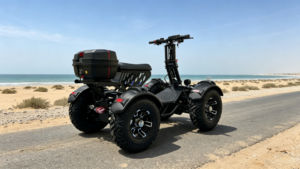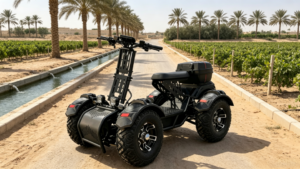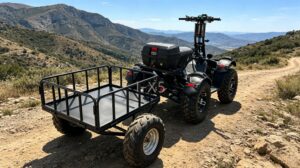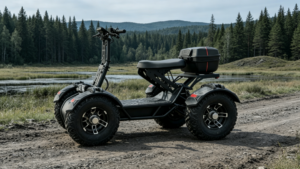
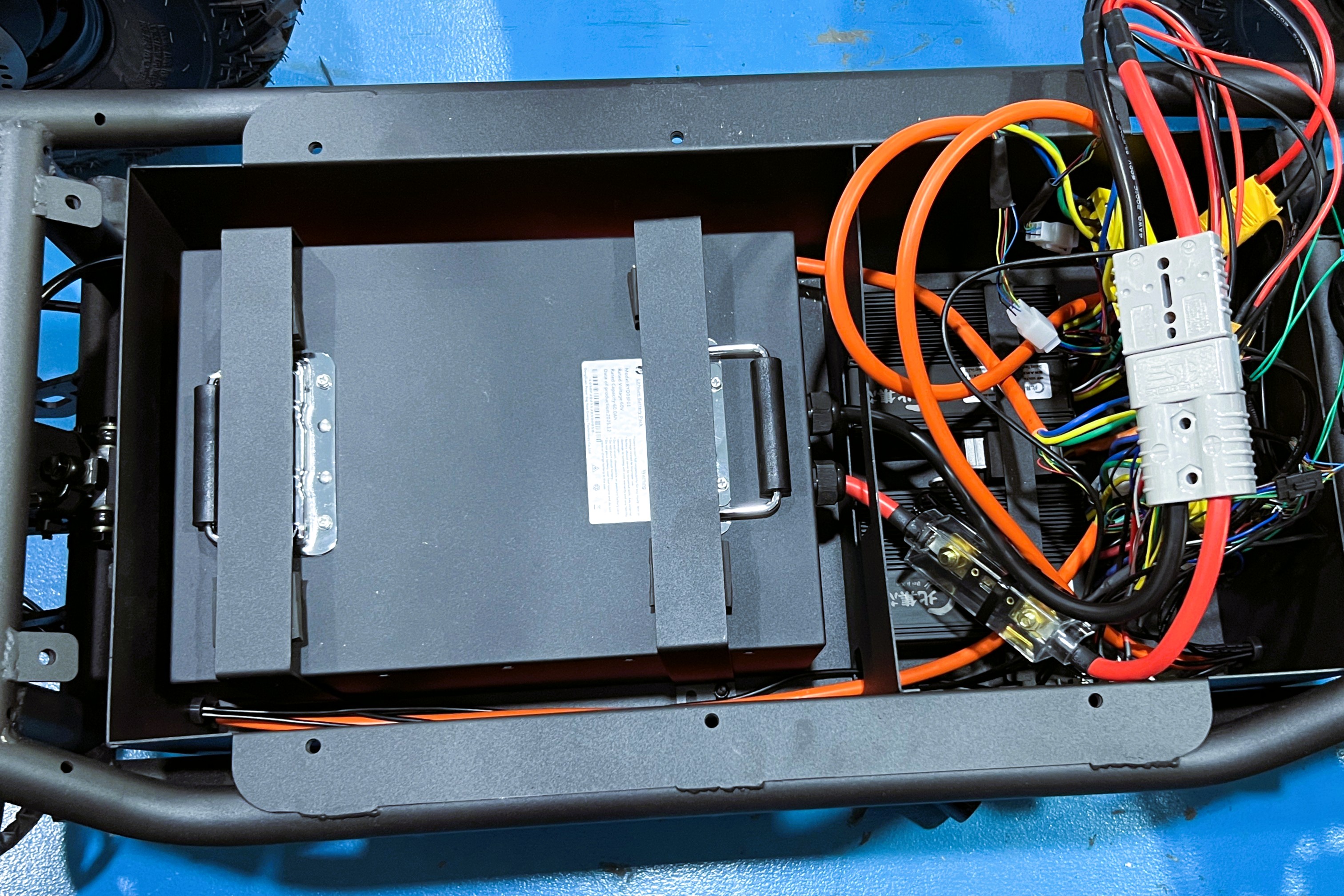
In the world of electric off-road vehicles, the battery is not just a component—it is the soul of the machine. It determines how far you can roam, how much power you can unleash, and, most importantly, how safe you are while doing it. The I-X5 Electric ATV Scooter represents a leap forward in this domain, utilizing state-of-the-art battery chemistry and intelligent management systems to deliver a riding experience that is as reliable as it is exhilarating.
This guide provides a comprehensive, technically detailed overview of the I-X5’s battery and charging architecture. Whether you are a weekend warrior, a hunting enthusiast, or a tech-savvy off-roader, understanding these systems is essential for maximizing performance, ensuring safety, and extending the lifespan of your investment.
1. Battery System Overview: The Heart of the I-X5
The I-X5 draws its power from a high-capacity 60V battery pack. Unlike many consumer-grade electric scooters that use standard lithium-ion cells, Edge scooter has opted for Lithium Iron Phosphate (LiFePO₄) chemistry for the I-X5. This decision is a deliberate engineering choice based on the harsh realities of off-road use.
Why LiFePO₄ Over NCM or Lead-Acid?
- Safety: LiFePO₄ has a much higher thermal runaway threshold than NCM (Nickel Cobalt Manganese) batteries. It is inherently more stable and less prone to combustion.
- Longevity: While standard lithium batteries last 800-1,500 cycles, LiFePO₄ delivers a staggering 2,000 to 3,000 full charge cycles. For a rider who charges weekly, this translates to over 40 years of use.
- Heat Tolerance: Off-road vehicles generate heat, and ambient temperatures in summer can soar. LiFePO₄ handles high temperatures with minimal degradation.
- Weight: While slightly heavier than NCM per kWh, the robust construction and lack of heavy cooling systems make it ideal for the I-X5’s rugged chassis.
Battery Specifications Table
The I-X5 is offered in multiple capacity configurations to suit different ranges and budgets. Here is the breakdown:
| Parameter | Specification |
|---|---|
| Model Variants | 60V 50Ah / 60Ah / 70Ah / 80Ah |
| Battery Chemistry | Lithium Iron Phosphate (LiFePO₄) |
| Rated Voltage | 60V DC |
| Charging Voltage | 67.2V (LiFePO₄ configuration) |
| Battery Energy (60Ah) | Approx. 3.6 kWh (60V × 60Ah) |
| Battery Energy (80Ah) | Approx. 4.8 kWh (60V × 80Ah) |
| Cycle Life | 2,000 – 3,000 cycles (LiFePO₄) |
| Operating Temperature (Charge) | 0°C to 45°C (32°F to 113°F) |
| Operating Temperature (Discharge) | -20°C to 60°C (-4°F to 140°F) |
| Ingress Protection | IP65 (Dust-tight and protected against water jets) |
Key Takeaway: The 80Ah variant offers approximately 25-30% more range than the 60Ah, making it the preferred choice for long backcountry expeditions.
2. The Battery Management System (BMS): The Guardian Angel
A battery is only as safe as the system that controls it. The I-X5 employs a sophisticated, multi-layered Battery Management System (BMS) . Think of the BMS as the brain of the battery—it continuously monitors, calculates, and acts to protect the cells from damage.
Here are the core protective functions integrated into the I-X5’s BMS:
| Feature | Description & Real-World Benefit |
|---|---|
| Overcharge Protection | If any single cell reaches its maximum voltage, the BMS immediately cuts off charging current. This prevents thermal stress and extends the lifespan of the pack. |
| Over-discharge Protection | If a cell’s voltage drops dangerously low, the BMS shuts down the discharge circuit. This prevents irreversible chemical damage (cell reversal) that would permanently kill the battery. |
| Over-current Protection | During aggressive acceleration or wheelspin, the current draw spikes. The BMS limits this to a safe threshold, protecting the motor controllers and the wiring harness from melting. |
| Short Circuit Protection | In the event of a catastrophic electrical fault (cut wire, water ingress), the BMS reacts in milliseconds to disconnect the circuit, preventing sparks, fires, or electrocution. |
| Temperature Protection | The BMS features thermal sensors embedded in the pack. If the battery exceeds safe charging temperatures (45°C) or discharging temperatures (60°C), it will reduce power or halt charging until the pack cools. |
| Cell Balancing | Not all cells discharge at exactly the same rate. The BMS performs passive balancing (or active balancing in high-end variants) to equalize voltages across the series. This ensures that no single cell is overworked, maximizing the overall lifespan of the 2,000+ cycle rating. |
| State of Charge (SOC) Estimation | The BMS uses coulomb counting and voltage tracking to provide an accurate real-time SOC reading displayed on the I-X5’s LCD dashboard. This eliminates “range anxiety” by giving you a reliable gauge of remaining energy. |
Important: If the BMS detects a severe fault, it enters a “lockout” mode. Do not panic. Often, disconnecting the battery for 5 minutes and reconnecting it will reset the BMS. If it persists, consult the Edge Scooter service network.
3. Charging Operation: Step-by-Step Protocol
Charging the I-X5 is straightforward, but following the exact protocol ensures safety and maximizes battery health. Here is the official EdgeMoto charging procedure.
3.1 Pre-Charge Preparation
Before you plug anything in, perform these safety checks:
| Checklist Item | Requirement |
|---|---|
| Battery Installation | Ensure the battery is correctly seated in the battery bay and the main power connector is firmly latched. |
| Vehicle Status | Shift the vehicle to P (Park) mode. Turn the ignition key or main power switch to OFF. |
| Charging Environment | The location must be dry, well-ventilated, and shielded from direct sunlight. Ambient temperature must be between 0°C and 45°C. |
| Charger Authenticity | Only use the official Edge Scooter 60V charger provided. Third-party chargers have different voltage curves and can destroy the BMS. |
| AC Socket | The wall socket must have a protective earth (ground) and be rated for a minimum of 10A to handle the continuous draw without overheating. |
3.2 The 8-Step Charging Process
Follow these steps in sequence for a safe and efficient charge:
- Park and Secure: Place the I-X5 on level ground. Engage the parking brake (if equipped) to ensure zero movement.
- Access the Port: Open the battery compartment cover (if required) or locate the dedicated charging receptacle (usually beneath the seat or on the side fairing).
- Connect Charger to Vehicle: Take the output connector of the charger and insert it firmly into the I-X5’s charging port. Align the polarity properly; you should hear a distinct “click” when it locks into place.
- Connect Charger to Wall: Plug the charger’s AC power cord into the wall socket. The charger will perform a self-test (displaying lights).
- Monitor the LED Indicator: The charger has a 3-color LED status light:
- 🔴 Solid Red: Normal charging in progress. The battery is accepting current.
- 🟢 Solid Green: Charging cycle complete. The battery is at 100% SOC.
- 🟡 Flashing Yellow/Orange: Fault condition. Check connections, or consult the troubleshooting section.
- Wait for Completion: Standard charging time for the 60Ah/80Ah variants ranges from 8 to 10 hours (0% to 100%). Using a fast charger (sold separately) can reduce this to 3-4 hours but should be used sparingly to preserve cycle life.
- Disconnect Order: Crucial: Always unplug the AC wall plug first, then unplug the vehicle-side connector. This prevents arcing at the sensitive vehicle port.
- Seal the Port: Close the waterproof cap over the charging port to prevent dust or moisture ingress during your next ride.
4. The Rules of Charging: Do’s and Don’ts
To ensure your I-X5 remains in peak condition, adhere to these charging disciplines:
| Rule | Explanation |
|---|---|
| Charge Time Limits | Standard charge: 8-10 hours. If you use a quick-charge option, do not exceed the manufacturer’s time limits. |
| Frequency | Do not let the battery drop below 20% regularly. Charge when the gauge hits 20-30% to avoid deep discharge stress. |
| Supervision | While a BMS is reliable, it is best practice to have the scooter charging in an area where you can periodically check it, or ensure a connected smoke detector is nearby. |
| No Coverings | Never cover the charger or the battery bay with a towel, blanket, or plastic. These components generate heat; suffocating them leads to thermal failure. |
| Lightning & Rain | Do not charge the I-X5 outdoors during thunderstorms or heavy rain. Water ingress into the AC socket or charger is a serious electrocution hazard. |
| Interrupting Charging | If you need to stop the charge prematurely, always disconnect the AC wall plug first, then the vehicle plug. |
5. Battery Maintenance & Longevity
Even the toughest LiFePO₄ battery benefits from routine care. Here is the recommended maintenance schedule for the I-X5’s power pack.
5.1 Routine Maintenance
| Task | Frequency | Action Required |
|---|---|---|
| Visual Inspection | Every charge cycle | Look for cracks, swelling, corrosion, or deformation on the battery casing. If the case is bulging, stop use immediately. |
| Terminal Check | Weekly | Inspect the metal charging pins for scorch marks, looseness, or oxidation. Clean with a dry cloth and apply dielectric grease. |
| SOC Calibration | Monthly | Perform a full discharge (down to 20%) followed by a full charge (to 100%) to allow the BMS to recalibrate its SOC estimation. |
| General Cleaning | Monthly | Wipe the exterior of the battery casing with a dry cloth. Never use a pressure washer or hose directly on the battery compartment. |
| Mounting Bolts | Quarterly | Check the bolts securing the battery tray in the frame. Vibration from off-road riding can loosen them, causing rattling and stress on connectors. |
5.2 Long-Term Storage (Off-Season)
If you are storing your I-X5 for the winter or for a deployment, follow these golden rules:
| Condition | Requirement |
|---|---|
| Storage SOC | 50% charge (approximately 3 out of 5 bars on the gauge). Storing at 100% causes calendar aging; storing at 0% kills the BMS. |
| Environment | Dry, cool, and ventilated. Ideal temperature: 10°C – 25°C (50°F – 77°F). |
| Check-up Cycle | Check the battery voltage every 30 days. If it drops below 40%, top it up to 50%. |
| Isolation | Store away from gasoline cans, chemicals, or heat sources. |
| Location | The battery can remain in the scooter, or be removed and stored on a shelf. If removed, store it on a non-conductive surface (wood or rubber). |
Note: After long-term storage, perform a full charge to 100% and let the BMS balance the cells for a few hours before your first ride.
6. Battery Safety: Standards and Emergency Response
Safety is non-negotiable. The I-X5’s LiFePO₄ chemistry is one of the safest on the market, but all energy-dense systems demand respect.
6.1 Absolute Prohibitions
| Forbidden Action | Consequence |
|---|---|
| Using a non-OEM charger | Incompatible voltage/current curves lead to BMS failure, fire, or explosion. |
| Charging below 0°C (32°F) | Causes Lithium Plating (metallic dendrites) which permanently perforates the separator. |
| Charging above 45°C (113°F) | Accelerates electrolyte decomposition, leading to gassing and thermal runaway. |
| Submerging or high-pressure washing | Moisture causes short circuits and corrodes the BMS circuit board. |
| Disassembling the pack | The warranty is void, and exposed terminals carry lethal voltages (60V+). |
| Dropping or puncturing | Internal short circuits produce intense heat. |
| Using metal tools near terminals | Instant arc flash; severe burns or eye damage. |
6.2 Emergency Diagnostics and Response
If you encounter any of these issues, use this table to guide your reaction:
| Symptom | Likely Cause | Immediate Action |
|---|---|---|
| Excessive heat during charging | Mismatched charger, high ambient temp, internal cell failure. | Stop charging. Move scooter to shade. Wait 2 hours. If still hot, contact support. |
| Battery casing swelling | Overcharge or internal gas generation from dendrites. | Stop use immediately. Isolate the vehicle outdoors. Contact Edge scooter for disposal/replacement. Do not ride. |
| Smoke or pungent odor | Thermal runaway, shorted cells. | Evacuate the area. Use a Class D dry powder extinguisher (or ABC dry chemical). Call emergency services. |
| Visible electrolyte leakage | Physical casing breach. | Avoid skin contact. Wear nitrile gloves. Place the battery in a sealed plastic bag. Contact a recycling center. Do not attempt to repair. |
| Sudden range drop | BMS calibration off, damaged cell, or extreme cold. | Perform a full calibration cycle (20% to 100%). If persistent in normal temps, request a cell balance check. |
| Failure to charge | BMS lockout, faulty charger, port damage. | Test with a multimeter (if qualified). Otherwise, swap to a known good charger. If no response, the BMS may have locked due to undervoltage. |
Critical Fire Protocol:
LiFePO₄ batteries are incredibly stable, but in the event of a fire:
- Evacuate all personnel to a safe distance.
- Dial emergency services.
- Use a Class D fire extinguisher or an ABC dry chemical extinguisher.
- Do not use water on a battery fire—water reacts with lithium compounds to produce flammable hydrogen gas and can spread the fire.
- Isolate nearby flammable materials.
7. Environmental Responsibility and Recycling
As an environmentally conscious rider, you must consider the end-of-life cycle of your battery. The I-X5’s LiFePO₄ battery is classified as hazardous waste due to its chemical components, but it is highly recyclable.
| Aspect | Details |
|---|---|
| Material Value | LiFePO₄ contains recoverable metals like lithium, iron, and phosphorus. Recycling reduces the need for new mining. |
| Disposal Ban | Never throw the battery in household trash or a dumpster. It will leak toxic electrolytes into groundwater. |
| Return Program | Edge Scooter partners with certified recyclers. Contact the Edge Scooter after-sales support for a prepaid return label or drop-off location. |
| Local Regulations | In many jurisdictions (EU, North America), it is illegal to dispose of EV batteries in landfills. Check your local environmental protection agency for collection events. |
Conclusion
The I-X5 Electric ATV Scooter is a testament to how far off-road electric mobility has come. Its 60V LiFePO₄ architecture offers a compelling blend of power, safety, and longevity that surpasses both traditional lead-acid and standard lithium-ion solutions.
However, the technology is only as good as the operator’s knowledge. By respecting the BMS safeguards, adhering to the charging protocol, following the maintenance schedule, and preparing for emergency scenarios, you will ensure that your I-X5 delivers thousands of kilometers of silent, roaring off-road performance.
Remember: A well-maintained battery is a safe battery, and a safe battery is the key to endless adventure. Charge responsibly, ride fearlessly.