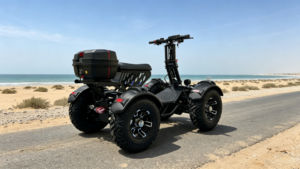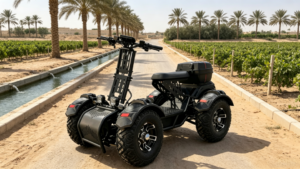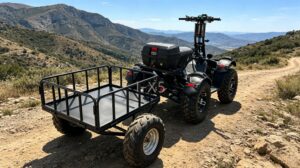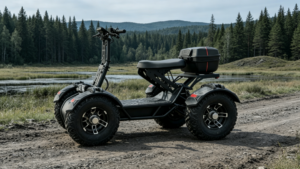
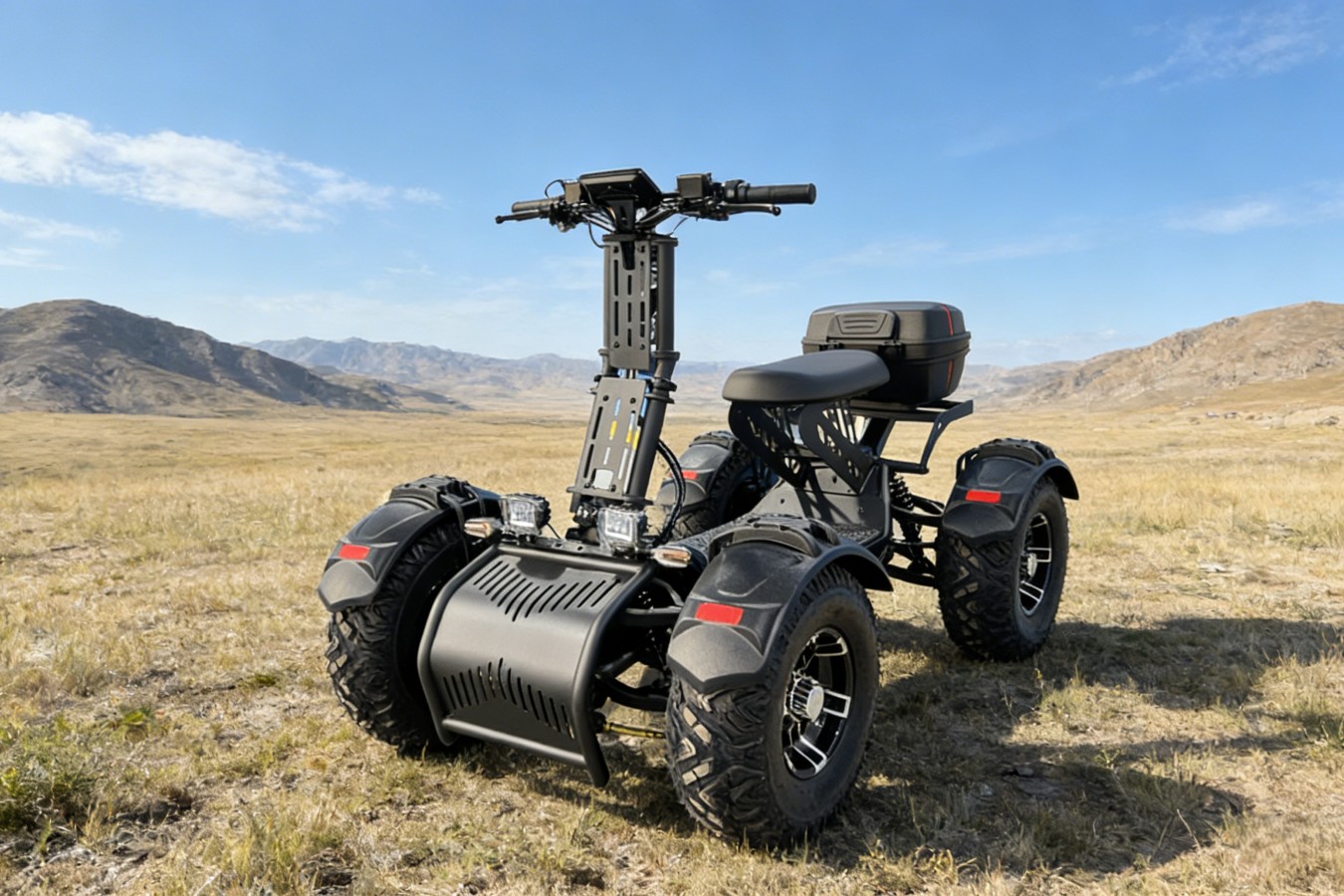
This Electric ATV Scooter is a NON-ROAD-LEGAL electric all-terrain vehicle. It is STRICTLY PROHIBITED to operate on public roads, highways, city streets, sidewalks, or any public thoroughfares. Use this vehicle exclusively on private property, off-road trails, farms, or designated riding areas in compliance with all applicable local laws and regulations. Failure to adhere to this warning may result in serious personal injury, vehicle damage, and legal liability.
The I-X5 is a high-performance off-road vehicle, capable of reaching speeds up to 55 km/h, with 10 kW peak power and a maximum climbing angle of 35°. Improper operation can lead to loss of vehicle control, rollover, or collision. You must read and fully understand this entire chapter before operating the vehicle.
Target Users & Usage Restrictions
| Category | Requirement |
|---|---|
| Minimum Age | 18 years or older only |
| License Required | No motor vehicle license required, but prior off-road vehicle experience is strongly recommended |
| Physical Condition | In good health, free from cardiovascular disease, vertigo, or physical impairments that may affect operation |
| Maximum Load | Total weight (rider + cargo) must not exceed 300 kg |
| Passengers | This vehicle is designed for single rider use only. Carrying passengers is strictly prohibited. |
| Operating Environment | Non-road areas only: private property, farms, off-road trails, wilderness areas |
NOTE: Do not operate this vehicle if you are taking any medication that may impair reaction time or judgment.
Personal Protective Equipment (PPE)
The following protective gear MUST be worn before every ride:
| Equipment | Minimum Requirement | Recommended Upgrade |
|---|---|---|
| Helmet | DOT / ECE / Snell certified off-road full-face helmet | Full-face off-road helmet with integrated goggles |
| Eye Protection | Wind-resistant goggles or helmet visor | Anti-fog, UV-protective off-road goggles |
| Hand Protection | Abrasion-resistant, non-slip riding gloves | Off-road gloves with knuckle guards |
| Foot Protection | Sturdy boots covering the ankles | Professional off-road boots with shin guards |
| Body Protection | Long sleeves and long pants | Off-road body armor (chest protector, knee pads, elbow guards) |
WARNING: Operating this vehicle without an approved helmet and basic protective gear significantly increases the risk of severe head trauma and limb injuries.
Pre-Ride Inspection
Perform the following checklist before every ride:
1 Frame & Structural Inspection
| Item | Inspection Point | Acceptance Standard |
|---|---|---|
| Frame | Visual inspection of main frame, swing arms, weld points | No cracks, deformations, or rust perforation |
| Handlebars | Check fixing bolts and telescoping mechanism | No looseness, smooth steering without sticking |
| Seat | Check seat mounting security | No wobbling, quick-release mechanism locks securely |
| Tires | Inspect tread wear, cracks, foreign objects | Tread depth ≥ 3 mm, no bulges or cuts |
| Wheels | Check wheel bolts and spokes | Bolts tightened, no deformation or cracks |
2 Brake System Inspection
| Item | Inspection Point | Acceptance Standard |
|---|---|---|
| Brake Levers | Squeeze levers, feel resistance | Appropriate travel, no sponginess |
| Brake Fluid | Check reservoir fluid level | Level between MIN–MAX marks |
| Brake Discs/Pads | Visual inspection of wear | Pad thickness ≥ 2 mm |
| Braking Performance | Low-speed push test | Front and rear brakes can effectively lock wheels |
WARNING: If the brake system feels spongy, produces unusual noises, or shows reduced stopping power, DO NOT OPERATE THE VEHICLE. Contact after-sales service immediately.
3 Electrical System Inspection
| Item | Inspection Point | Acceptance Standard |
|---|---|---|
| Battery Level | Check LCD display | Charge ≥ 20% (recommended ≥ 30%) |
| Battery Connections | Inspect battery compartment terminals | No looseness, corrosion, or burn marks |
| Display | Power on and check LCD | Normal display, no fault codes |
| Lighting | Test headlight, taillight, turn signals | All function properly |
| Motor Operation | Test run with wheels off ground | Smooth operation, no abnormal noise or vibration |
4 Suspension & Tire Inspection
| Item | Inspection Point | Acceptance Standard |
|---|---|---|
| Tire Pressure | Use pressure gauge | Per tire sidewall specification (typically 15–20 psi) |
| Suspension Travel | Press on vehicle to test rebound | Smooth rebound, no oil leaks or abnormal noise |
| Swing Arm Joints | Inspect all connection points | No looseness or excessive clearance |
TIP: It is recommended to perform a comprehensive inspection before first use and after every 50 km of riding.
Battery Safety Guidelines
Charging Safety
| Guideline | Requirement |
|---|---|
| Charger | Use ONLY the original 60V charger supplied by the manufacturer |
| Charging Environment | Dry, well-ventilated area, temperature 0°C–45°C |
| Charging Duration | 8–10 hours; disconnect power promptly after full charge |
| During Charging | Never cover the charger; maintain adequate airflow for cooling |
| Lightning Storms | Avoid outdoor charging to prevent lightning strike damage |
DANGER: Using non-original chargers, charging in extreme temperatures, or overcharging may cause the battery to overheat, catch fire, or explode.
Battery Storage
| Guideline | Requirement |
|---|---|
| Long-term Storage Charge | Maintain approximately 50% charge |
| Storage Environment | Dry, cool, temperature 10°C–25°C |
| Storage Check Interval | Check charge level monthly; recharge to 50% if needed |
| Prohibited Conditions | Never expose battery to open flames, high temperatures, or water immersion |
Battery Anomaly Response
| Anomaly | Response Procedure |
|---|---|
| Battery casing swelling | STOP USE IMMEDIATELY; contact service for replacement |
| Abnormal heating during charging | Disconnect power; allow to cool; inspect |
| Smoke or unusual odor | Move away from ignition sources; use dry powder extinguisher; contact fire department |
| Battery water immersion | DO NOT CHARGE; air dry and have inspected by professional |
Operating Procedures
1. Pre-Start Preparation
- Check Gear Position – Ensure gear is in P (Park)
- Select Drive Mode – Choose 4WD or 2WD based on terrain
- Clear Surroundings – Ensure 5 meters front and rear are clear of people/obstacles
- Don Protective Gear – Confirm helmet, gloves, and guards are properly fitted
- Adjust Handlebar Height – Adjust to comfortable position and secure
2. Starting & Setting Off
| Step | Action |
|---|---|
| 1 | Insert key and turn clockwise to ON position |
| 2 | Observe LCD display self-check; confirm no fault codes |
| 3 | Squeeze brake lever |
| 4 | Shift gear from P to D (Drive) |
| 5 | Slowly release brake; gently twist throttle |
| 6 | Maintain low speed (< 10 km/h) for 10–20 meters to confirm normal operation |
WARNING: The I-X5 features hub motors that deliver maximum torque at zero RPM. Aggressive throttle application at start will cause sudden forward lurching and is extremely likely to lead to loss of control.
3. Gear & Drive Mode Selection
| Mode | Application | Operation Method |
|---|---|---|
| D (Drive) | Normal forward travel | Shift to D when stationary |
| R (Reverse) | Maneuvering in tight spaces | Shift to R when stationary; gently apply throttle |
| P (Park) | Parking, charging, inspection | Shift to P when stopped; prevents rolling |
| 4WD (Four-Wheel Drive) | Steep slopes, sand, mud, snow | Shift when stationary or at low speed |
| 2WD (Two-Wheel Drive) | Flat hard surfaces, fuel saving | Shift when stationary or at low speed |
NOTE: When switching between 4WD and 2WD, it is recommended to bring the vehicle to a complete stop to avoid drivetrain shock loads.
4. Cornering Operation
| Guideline | Description |
|---|---|
| Slow In | Reduce speed before entering corner; NEVER accelerate or brake sharply mid-corner |
| Weight Shift | Lean body inward to maintain center of gravity balance |
| Vision | Look toward the corner exit, not at the front wheel |
| Slope Cornering | Uphill corners: ride wide; downhill corners: ride tight |
| Side Slope | Cross slopes perpendicularly; avoid riding along the slope face |
WARNING: The I-X5 has a high center of gravity. High-speed cornering or side-slope riding significantly increases rollover risk.
5. Hill Climbing & Descending
Climbing:
| Guideline | Description |
|---|---|
| Approach Speed | Build momentum before the base of the hill |
| Select 4WD | Steep inclines MUST be tackled in four-wheel drive |
| Steady Throttle | Maintain constant throttle; avoid fluctuations |
| Stopping on Hill | If stopping is necessary, shift to P and apply brake firmly |
| Maximum Grade | Maximum climb angle is 35°. Exceeding this may cause motor overload or rollback |
Descending:
| Guideline | Description |
|---|---|
| Low Speed | Use low gear or gentle braking to control descent speed |
| No Coasting | Never turn off power or coast in neutral |
| Shift Weight Back | Move body weight rearward to increase rear tire traction |
| Cadence Braking | Use intermittent braking on long descents to avoid brake fade |
| No Sudden Braking | Abrupt braking downhill can cause forward tip-over |
6. Water Crossing
| Guideline | Description |
|---|---|
| Maximum Depth | Not to exceed 1/2 of tire radius (approximately 250 mm) |
| Pre-Crossing | Verify battery compartment seal integrity; scout water depth |
| During Crossing | Proceed slowly at steady speed; DO NOT stop, shift, or accelerate suddenly |
| Post-Crossing | Immediately check brake performance (may be temporarily reduced); dry electrical components |
| Prohibited | NEVER allow battery compartment immersion; avoid high-pressure washing of motors or display |
DANGER: While this vehicle’s electrical system has water-resistant features, battery compartment immersion can cause short circuits, fire, or electric shock. Water crossing is at the rider’s own risk.
7. Night Riding
| Guideline | Description |
|---|---|
| Lighting Check | Verify LED headlight and taillight function before departure |
| Reduced Speed | Night visibility is limited; reduce speed by 30%–50% |
| Low Beam Use | Use low beams when meeting other vehicles/riders to avoid glare |
| Reflectors | Ensure reflective stickers are intact for better visibility |
| Route Planning | Familiarize yourself with routes in advance; avoid unknown terrain |
Special Terrain Riding Guide
| Terrain Type | Key Riding Points |
|---|---|
| Sand | Maintain steady speed; avoid sudden acceleration/braking; lower tire pressure for flotation (carry pump to restore) |
| Mud | Use 4WD mode; maintain steady throttle; prevent wheel spin from digging holes |
| Snow/Ice | Extreme caution required; reduce tire pressure for larger contact patch; avoid sharp turns and sudden braking |
| Rocks/Rocky Ground | Proceed slowly; choose stable lines; protect tire sidewalls |
| Grass/Farmland | Watch for hidden obstacles (stumps, drainage ditches); respect landowner rights |
| Steep Slopes | Always go straight up and down; avoid traversing; shift weight rearward when descending |
Prohibited Actions
The following actions are STRICTLY FORBIDDEN. Violation may cause serious accidents and void the warranty:
| Prohibited Action | Consequence |
|---|---|
| Operating on public roads | Traffic accidents, legal liability |
| Carrying passengers | Overload, loss of stability |
| Riding under the influence | Impaired reaction, poor judgment |
| Speeding (> 55 km/h) | Loss of control, rollover |
| Riding one-handed or without hands | Loss of steering control |
| Standing while riding in riding mode | Unstable balance, falls |
| Climbing slopes exceeding 35° | Motor overload, vehicle rollback |
| Battery modification or disassembly | Fire, explosion, electric shock |
| Using non-original parts | Performance issues, safety hazards |
| Riding in extreme weather (heavy rain, blizzard, strong winds) | Reduced visibility, road grip loss |
Emergency Procedures
1. Vehicle Loss of Control
| Situation | Response |
|---|---|
| Throttle stuck | Immediately turn off power switch while squeezing brakes firmly |
| Brake failure | Shift to low gear; use regenerative braking where available; find safe area to friction-brake |
| Vehicle skidding | Release throttle; gently turn steering toward skid direction; recover traction; straighten |
| Front wheel lifting (wheelie) | Immediately release throttle; shift body weight forward |
2. Battery Emergencies
| Situation | Response |
|---|---|
| Battery smoke/fire | Move away immediately; call fire department; use dry powder or CO₂ extinguisher; NEVER use water |
| Battery leak | Avoid skin contact; wear rubber gloves for cleanup; rinse contacted skin with plenty of water |
| Electric shock | Cut power; use insulated object to move live components; perform CPR if necessary; call emergency services |
3. Accident Procedure
- Secure the scene – Activate hazard lights (if available); set up warning triangles
- Provide aid – Address severe injuries first (bleeding, fractures); call emergency services
- Document the scene – Take photos; record incident details
- Contact service – Call EdgeScooter after-sales support; report the incident
- Vehicle inspection – Vehicle must be inspected by professionals before further use
Children & Pet Safety
| Guideline | Description |
|---|---|
| Keep Children Clear | Ensure children are at least 10 meters away during operation |
| No Child Operation | This vehicle is for adults only; minors are NOT permitted to operate |
| Pet Management | Ensure pets are away from riding areas before starting the vehicle |
| Parking Safety | After parking, shift to P, remove the key, and prevent children from accidentally starting |
Safety Driving Motto
“One Check – Two Wear – Three Slow – Four Steady – Five Forbidden”
- One Check: Complete vehicle inspection before every ride
- Two Wear: Helmet and all protective gear
- Three Slow: Slow on start, slow on corners, slow on descents
- Four Steady: Steady on throttle, steady on brakes, steady on steering, steady on mindset
- Five Forbidden: No alcohol, No speeding, No passengers, No public roads, No modifications
Remember: Safe riding not only protects you but also protects everyone around you. Put safety first on every journey.