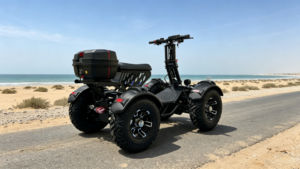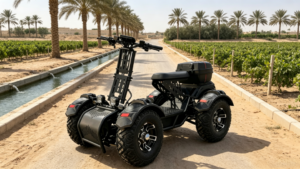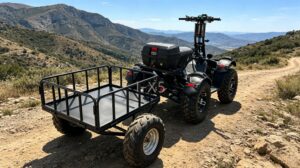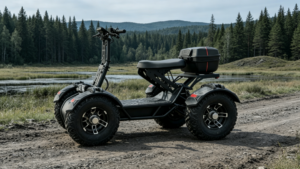
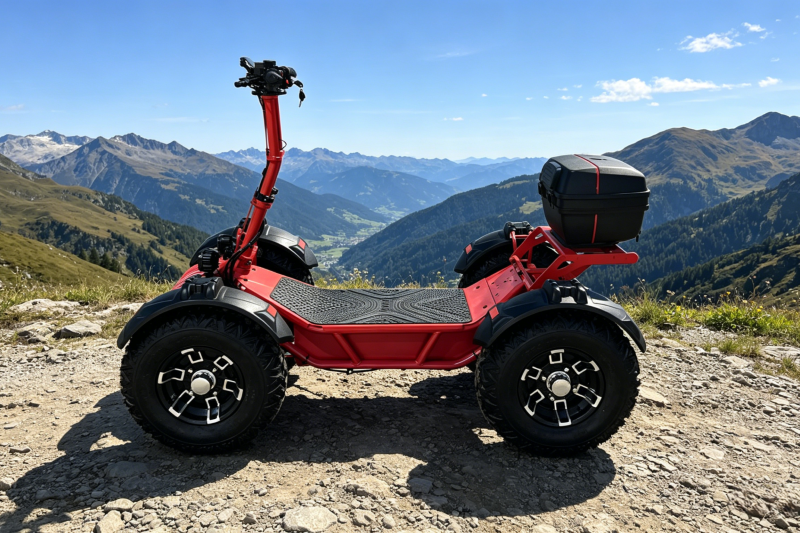
Owning an Electric ATV Scooter like the EdgeScooter I-X5 is a transformative experience. You trade the rumble of a gas engine for the silent, instantaneous torque of hub motors, and you swap oil changes for battery charge cycles. But this new technology comes with a new set of responsibilities—specifically, how to store it.
Unlike a gas-powered ATV, which you can essentially park in a barn for six months, add fresh fuel, and crank back up, an Electric ATV Scooter is a sophisticated electrochemical machine. The heart of the I-X5 is its ternary lithium battery pack (ranging from 3kWh to 4.8kWh), and improper storage can permanently damage this expensive component.
Whether you are packing away your I-X5 for a brutal winter, a rainy monsoon season, or just a month-long business trip, you cannot simply roll it into a shed and forget about it. This complete guide covers the specific, non-negotiable requirements for storing your Electric ATV Scooter to ensure it emerges from hibernation with 100% of its performance intact.
Part 1: The Golden Rule – Battery State of Charge (SoC)
The single most critical variable for storing any electric vehicle, including the I-X5, is the State of Charge (SoC) of the battery. Do not store it full. Do not store it empty. Store it in the “Goldilocks Zone.”
The Danger of 100% Charge
If you park your I-X5 right after a full charge and leave it for months, the battery cells sit at their maximum voltage (typically 4.2V per cell). High voltage + time = accelerated chemical degradation. Storing at 100% SoC in a warm garage can permanently reduce your battery capacity by 10-20% over a single off-season. Your 4.8kWh battery might act like a 3.8kWh battery next spring.
The Danger of 0% Charge
Conversely, storing the scooter with a dead battery is catastrophic. Lithium batteries have a “sleep mode.” If the voltage drops below a certain threshold (usually 2.5V-2.7V per cell), the battery management system (BMS) will shut down permanently to prevent a fire hazard. A battery stored at 0% for two months is often unrecoverable, turning your $2,000 battery pack into a heavy paperweight.
The Sweet Spot: 40% – 60%
For the I-X5, the ideal storage SoC is between 40% and 60%. At this level, the chemical reactions inside the ternary lithium cells slow down dramatically. This is the voltage range where the battery experiences the least amount of calendar aging.
Pro Tip: Before storing your I-X5, ride it normally, then check the display. If it shows 3-4 bars out of 5 (roughly 50-60%), you are good to go. If it is higher, ride it around the block a few times. If it is lower, give it a short top-up charge.
Part 2: Temperature Control – Avoiding the Extremes
The I-X5 is built tough, with rugged suspension and hydraulic brakes, but the battery is a delicate flower when it comes to temperature. The user manual for most Electric ATV Scooters specifies an ideal operating range of 0°C to 45°C (32°F to 113°F). However, storage allows for a slightly wider range, but with strict rules.
The Cold (Below 0°C / 32°F)
Can you store an I-X5 in an uninsulated garage in Minnesota or Siberia? Yes, but with a major caveat: Do not charge it when it is frozen.
Lithium batteries can be stored in sub-zero temperatures. In fact, cold slows down chemical degradation, which is good for longevity. The problem arises when you try to charge a battery that is below 0°C (32°F). This causes “Lithium Plating”—where metallic lithium forms on the anode, permanently reducing capacity and creating a risk of internal short circuits.
Storage Rule for Cold Climates:
- Storing at -10°C (14°F) is fine for the battery’s health.
- However, when you retrieve the scooter in spring, you must bring it inside (to room temperature) for 12-24 hours before plugging it in to charge.
The Heat (Above 30°C / 86°F)
Heat is the real enemy. For every 10°C (18°F) increase in average storage temperature, the rate of battery degradation roughly doubles.
If you store your I-X5 in a metal shed in Arizona where summer temperatures hit 50°C (122°F), you will cook the cells. The electrolyte inside will break down faster, and the internal resistance will skyrocket.
Storage Rule for Hot Climates:
- Never store your Electric ATV Scooter in direct sunlight (e.g., a glass sunroom or a black metal shed).
- Ideally, store it in a basement, a climate-controlled garage, or at least a shaded concrete structure.
- The ideal storage temperature is 15°C – 20°C (59°F – 68°F).
Part 3: The Battery Management System (BMS) – The Sleeping Watchdog
The I-X5 is not a dumb battery; it contains a sophisticated Battery Management System (BMS) . This circuit board balances the cells, prevents over-current, and protects against short circuits. However, the BMS itself draws a tiny amount of power (called “parasitic drain”) even when the scooter is turned off.
The “Deep Sleep” vs. “Storage Mode”
Many high-end Electric ATV Scooters, including the I-X5, feature an automatic “Storage Mode” or “Ship Mode.”
- Normal Mode: The BMS is active, listening for the power button. It might drain 1-2% of the battery per week.
- Storage Mode: The BMS cuts off almost all non-essential functions. Drain drops to 0.5% per month.
Action Step: Check your I-X5 manual for how to engage “Storage Mode” (often holding the power button for 10 seconds until the lights flash). If your model lacks this, you must manually check the battery voltage every 4-6 weeks.
The “Wake Up” Procedure
When you retrieve your I-X5 after 3-6 months, do not be alarmed if it appears “dead.” The BMS might have entered a deep protection state. Plugging in the charger for 5-10 minutes will usually “wake up” the BMS, after which normal charging and operation resume.
Part 4: Physical Storage – Tires, Corrosion, and Critters
While the battery gets all the attention, the mechanical parts of your Electric ATV Scooter still need love. The I-X5 weighs over 200 kg (440 lbs), and leaving that weight on four points for months can cause problems.
1. Tire Pressure and Flat Spots
Unlike a car, scooter tires are relatively soft. If you store the I-X5 fully inflated for six months, the weight can create permanent flat spots on the contact patches. When you ride it again, you will feel a “thump-thump-thump” as the deformed rubber rolls.
Solution:
- Inflate tires to the maximum recommended PSI (usually printed on the tire sidewall, often 30-35 PSI) during storage. This makes the tire harder and less likely to deform.
- Even better: Put the scooter on a lift or a stand so the tires are off the ground. If you don’t have a lift, move the scooter forward or backward a few feet every month to rotate the contact point.
2. Brake Corrosion
The I-X5 features four-wheel hydraulic disc brakes. These metal discs (rotors) are exposed to air and humidity. After months of sitting, a layer of surface rust will form. While this usually burns off after the first few brake applications in spring, severe rust can cause pulsing or reduced braking power.
Solution:
- Store the scooter in a dry environment. Use a dehumidifier if storing indoors.
- Avoid storing it directly on damp concrete or dirt floors. Place a tarp or rubber mat underneath to block rising moisture.
3. Rodents and Wiring
This is a universal problem for all stored vehicles, but it is more catastrophic for electric scooters. Mice, rats, and squirrels love chewing on wires. On a gas ATV, they might chew a fuel line. On an Electric ATV Scooter, they can chew the throttle sensor wire, the motor phase wires, or the battery communication cables.
Solution:
- Do not store your I-X5 near birdseed, pet food, or garbage.
- Use rodent repellent (peppermint oil packs or ultrasonic repellers) inside the storage area.
- Critical: Do not use poison bait. A poisoned mouse often crawls into a warm, tight space (like the battery compartment of your I-X5) to die, creating a horrible smell and a biohazard cleanup.
Part 5: The Pre-Storage Checklist (Step-by-Step for I-X5)
Before you walk away from your EdgeMoto I-X5 for the season, run through this 8-step checklist.
Step 1: Clean the Scooter
Mud, salt, and grime trap moisture. Pressure wash the I-X5 gently (avoid direct spraying into the hub motor seams or the battery compartment). Dry it thoroughly with a cloth. Dried mud is harder to clean than wet mud, so do it now.
Step 2: Dry Out the Brakes
After washing, ride the scooter slowly and apply the brakes gently to evaporate moisture from the pads and rotors. Wet brakes stored for months can fuse together.
Step 3: Set the Battery to 50-60%
Use the display to verify the State of Charge. If it is at 80% or 100%, turn on the headlights and let the scooter idle for 10-15 minutes to drain it down to 60%. Never leave it full.
Step 4: Check Tire Pressure
Inflate to the maximum recommended cold PSI (check your I-X5 manual; typically 30-36 PSI for off-road tires).
Step 5: Disconnect the Battery (If Possible)
If the I-X5 has a manual battery disconnect switch or a removable battery pack, remove it or flip the switch. This stops the BMS from draining the pack and eliminates the risk of a parasitic drain killing the battery.
Step 6: Lubricate Moving Parts
Apply a light, dry lubricant (like silicone spray) to the suspension linkages, kickstand pivot, and folding mechanism. Do not use wet oil or grease that will attract dust.
Step 7: Elevate the Tires
Place blocks of wood or a dedicated scooter lift under the chassis so the four wheels are off the ground. If that is impossible, place rubber mats (not concrete) under the tires.
Step 8: Cover, But Not Airtight
Use a breathable fabric cover. Do not use plastic tarps that trap condensation. A sheet or a dedicated motorcycle cover allows moisture to escape while keeping dust off.
Part 6: The Post-Storage Wake-Up Procedure
You have waited patiently. Spring has arrived. Do not just hop on and ride. Follow this resurrection protocol for the I-X5:
- Visual Inspection: Check for rodent nests, chewed wires, or flat tires.
- Tire Pressure: Adjust back down to the standard riding PSI (usually 20-25 PSI for off-road traction).
- Charge Slowly: Plug in the charger. The BMS will take a few minutes to “wake up.” Let it charge to 100% slowly (do not use a fast charger for the first charge back). The BMS needs time to balance the cells after long storage.
- Check Brakes: Spin each wheel manually. Listen for rust grinding on the brake pads. Ride slowly in a parking lot and brake firmly several times to clean off surface rust from the rotors.
- Test Low Speed: Run the scooter at low speed for 5 minutes. Listen for any unusual noises from the four hub motors (a slight whine is normal; grinding or clicking is not).
Conclusion: Respect the Chemistry, Respect the Ride
Storing an Electric ATV Scooter like the EdgeScooter I-X5 is not difficult, but it requires discipline. You cannot treat it like a shovel or a gas lawnmower. You are storing a high-density energy system.
Remember the three pillars of electric storage:
- Chemistry: 50-60% battery charge. Not full, not empty.
- Climate: Cool and dry. Avoid freezing charging and scorching heat.
- Care: Tires off the ground, brakes dry, and critters out.
Follow this complete guide, and your I-X5 will reward you with years of silent, roaring power. Ignore it, and you might return to a scooter that has lost half its range or won’t turn on at all. The future is silent, but it still demands your attention when parked. Store smart, ride hard.